

Zakat and fitra: your gift safely delivered to those in need
When Ramadan begins, iftar tables are laid in many homes and preparations for Eid get under way. In many parts of the world, orphans, widows and poor families are meanwhile wondering how to put an iftar meal on the table or dress their child for Eid. Zakat and fitra are the right that Allah has entrusted to us for these brothers and sisters.
IHO Ebrar delivers the zakat and fitra that Muslims entrust to us, especially during Ramadan, to the 8 groups mentioned in the Qur’an in different parts of the world. Fitra is a sadaqah that every free Muslim who reaches the end of Ramadan and is able to must give. It is €15 per person and must be given before the Eid prayer. Zakat is one of the five pillars of Islam: one fortieth of wealth that exceeds the nisab and has been held for a year goes to people in need.

At a glance
- Fitra: €15 per person, before the Eid prayer
- Zakat: 1/40 (2.5%) of wealth above the nisab, after one year
- For whom: the 8 groups named in the Qur’an (At-Tawbah 9:60)
- Reference: state “Zakat” or “Fitra” with your transfer
What IHO Ebrar has done
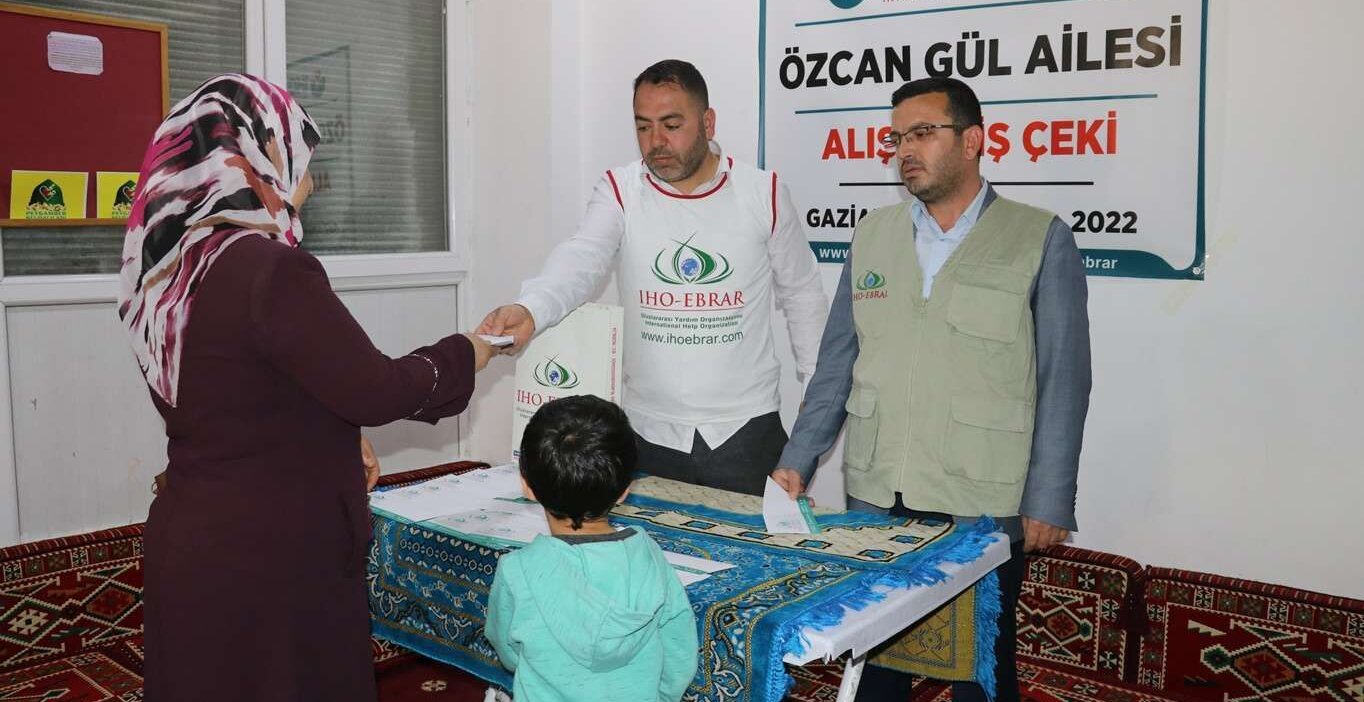
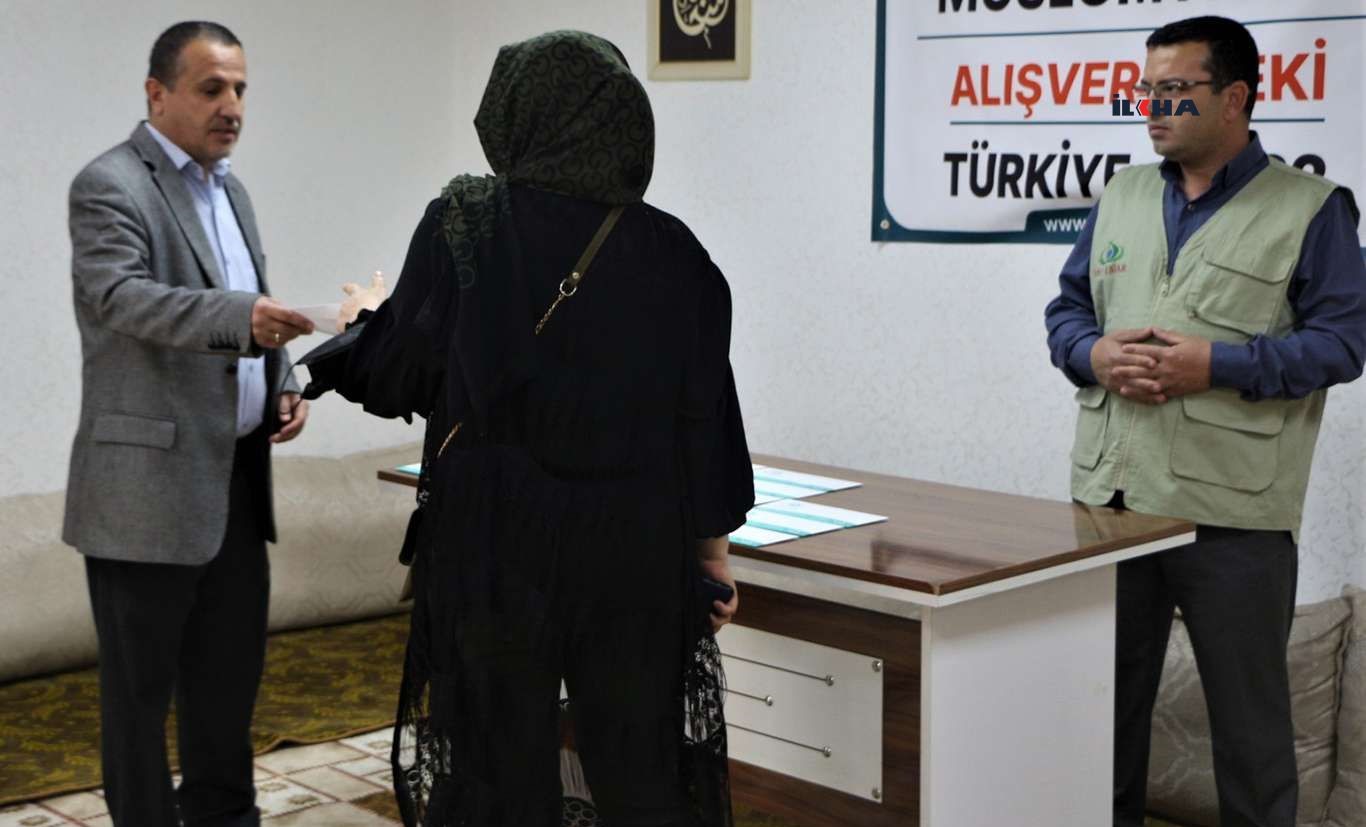
Every year we deliver your zakat and fitra to the families who need it most, in several countries. In Ramadan 2021 your donations enabled us to provide aid in 20 countries in total. During our Ramadan projects in Chad and Cameroon we distributed food aid to families, and in Mali we put together food packages. In Turkey we gave families in need in cities such as Gaziantep and Mardin a shopping voucher, so they could buy what they needed themselves, with dignity. The photos on this page show that work.
Why zakat and fitra matter
When zakat and fitra reach those who need them most, they preserve balance in society and reflect the social justice of Islam. Ramadan is a blessed month in which worship and good deeds are rewarded many times over. By giving zakat in this month you fulfil a religious duty and at the same time support your brothers and sisters in need.
“Zakah expenditures are only for the poor and for the needy and for those employed to collect it and for bringing hearts together and for freeing captives and for those in debt and for the cause of Allah and for the stranded traveller, an obligation imposed by Allah. And Allah is Knowing and Wise.” (Surah At-Tawbah, verse 60)
“And establish prayer and give zakah and bow with those who bow.” (Surah Al-Baqarah, verse 43)
“Protect your wealth with zakat. Treat your sick with sadaqah. Meet the waves of affliction with supplication to Allah.” (Abu Dawud, Tabarani, Bayhaqi, Targhib)
Ways to donate
- Bank transfer: IBAN NL56 ABNA 0150 6461 78 in the name of IHO Ebrar. State Zakat or Fitra in the description.
- Payment link via WhatsApp: send the amount and purpose to +31 6 39 888 038. You will receive a secure payment link for your own bank straight away.
- Through a representative: you can also hand your zakat and fitra to one of our regional representatives.
IHO Ebrar is a registered ANBI charity in the Netherlands. Under certain conditions your gift is tax deductible.


Zakat calculator: calculate your zakat now
Use the zakat calculator below to work out in seconds how much zakat you owe. Enter amounts in euros (for example 12,000 or 12000.50). Zakat is 2.5% of your net wealth after deducting debts. The nisab is the value of 80 grams of gold.
Fitra calculator
Fitra is €15 per person.
This calculator gives an estimate. In special cases (such as a business partnership, pension or rental income) we advise you to consult an imam or scholar.
Frequently asked questions
What is zakat?
Zakat means that Muslims who are wealthy by the religious standard give one fortieth (2.5%) of their wealth once a year to the groups designated by the religion.
Who must give zakat?
Zakat is obligatory for every free, sane and adult Muslim who, beyond their basic needs and debts, owns wealth equal to the nisab and has held it for one year.
What is fitra?
Fitra is a sadaqah that every free Muslim who reaches the end of Ramadan and is able to must give. It is also called sadaqat al-fitr.
When and to whom is fitra given?
Fitra must be given on the first day of Eid al-Fitr before the Eid prayer, or preferably earlier during Ramadan, so that the poor person who receives it can provide for their needs. Fitra is given for every Muslim: young and old, healthy and sick, including those who are not mentally competent.
What is sadaqah?
Sadaqah is broader than zakat and includes every voluntary gift and expenditure made for the sake of Allah. Zakat in particular and sadaqah in general form an economic system that Islam uses as a means of social solidarity, so that the material and spiritual needs of individuals and society are met.
To whom is zakat given?
The Holy Qur’an says: “Zakah expenditures are only for the poor and for the needy and for those employed to collect it and for bringing hearts together and for freeing captives and for those in debt and for the cause of Allah and for the stranded traveller, an obligation imposed by Allah…” (At-Tawbah 9:60) These eight groups can be explained as follows:
The poor (faqir): someone who has no wealth above the nisab and is therefore not obliged to pay zakat themselves.
The needy (miskin): someone who owns nothing and can only meet even daily needs such as food and clothing with the help of others.
The zakat collectors: officials appointed by the state to collect zakat may, even if they are wealthy, receive from the zakat an amount sufficient for themselves and their dependants for as long as they do this work.
Those whose hearts are to be won: to build a warm bond with people drawn to Islam, help them reach the truth and strengthen the steadfastness of new Muslims, a share of the zakat fund can be allocated to them.
Captives: when slavery existed, Islam gave slaves the right to agree with their owner to buy their freedom. For those who could not pay, Islam provided a contribution from the zakat fund to make their freedom possible.
Those in debt: someone with debts who owns no wealth equal to the nisab besides the debt. Giving zakat to such a person takes priority over giving it to a poor person without debts and brings greater reward.
In the cause of Allah: someone who takes part in the struggle in the way of Allah, to raise His word or defend the homeland, but needs sustenance, equipment and the like.
The stranded traveller: someone who set out for a noble purpose, such as the struggle, Hajj or seeking knowledge, and has been left without means in a foreign land. Such people may receive zakat, even if they are wealthy, when they cannot access their wealth at home at that moment.
What are the benefits of zakat?
Zakat brings the rich and the poor closer together.
Zakat enables people who cannot work to lead a normal life.
Zakat protects a person from greed and selfishness and makes them generous.
Zakat is gratitude for the blessing of wealth that Allah has given. Wealth purified by zakat is blessed and grows.
Whoever gives zakat also fulfils their duty towards the society in which they live.
Does someone without a home who is saving for a house have to pay zakat after a year?
Even if a person does not own a home, zakat is due on the savings once they reach the value of 80 grams of gold and a year has passed.
Do you have to tell the recipient that it is zakat or fitra?
When giving zakat or fitra you do not need to tell the recipient. If you give it to a charity, however, you must always state what it is intended for.
May you pay zakat that is only due later in advance?
There is no objection to giving zakat before it is due when you find a suitable recipient. When the due date arrives, you do not need to pay again.
Is zakat due on a car for personal use, the house you live in or rented property?
No zakat is due on these. Zakat is, however, paid on any income these assets generate.
Do you have to wait until Ramadan to give zakat?
For zakat you must hold wealth equal to the nisab for one year according to the Islamic (Hijri) calendar. From the moment you own this amount you count one year, after which the zakat is due. There is therefore no condition that zakat be given in Ramadan. Because the reward for good deeds is multiplied in Ramadan and fasting helps people understand the situation of the poor better, many people still give their zakat in Ramadan.
Who may not be given zakat?
Zakat is not given to one’s mother, father, grandparents, sons, daughters and grandchildren, because they should already be supported from one’s own wealth. If they are in need, zakat may be given to married brothers and sisters, their children (nephews and nieces), aunts and uncles and their children, and then to other relatives and neighbours.
To whom should zakat be given?
Zakat can be given to the poor, the needy, people who struggle to provide their daily food, stranded travellers, people in debt, those striving in the cause of Allah and students seeking knowledge.
Which assets count towards the nisab?
80 grams of gold or more, 560 grams of silver or more, money worth 80 grams of gold, trade goods of the same value, more than 40 sheep and goats, 30 or more cattle and water buffalo, and 5 or more camels.
What is sadaqah jariyah?
Sadaqah jariyah is, as the name says, a continuous charity that keeps flowing like a river. Establishing a foundation or building a mosque, drinking fountain, well, bridge or madrasa are gifts whose reward continues for as long as people benefit from them.
Do donations to foundations and associations count as sadaqah or sadaqah jariyah?
Donations to charities count as sadaqah or sadaqah jariyah and the donors are rewarded for them. The organisations are also rewarded because they make the good possible. Water wells dug by aid organisations, facilities they build, vehicles they buy to deliver aid and facilities for medical care all fall under sadaqah jariyah.
Are tax and zakat the same?
Tax and zakat should not be confused. It is wrong for someone who is wealthy in the religious sense to refuse to give zakat thinking “I already pay tax to the state”. Zakat and tax differ fundamentally in their basis, amount, purpose and destination.
Does someone who cannot yet meet their basic needs, but owns wealth that meets the zakat conditions, have to pay zakat?
If a person’s wealth, after deducting basic needs, does not reach the nisab, that person is not obliged to pay zakat.
Is zakat due on wealth or money set aside for a debt?
No zakat is due on money held to repay a debt. Anyone who still owes zakat from previous years also counts as a debtor. Whoever is left with less than the nisab after paying outstanding zakat is not obliged to pay zakat.
Is zakat due on a woman’s jewellery?
Whether tableware, jewellery, ornaments or bars: zakat must be paid on gold and silver that men and women use as jewellery or household items if, on its own or together with other wealth, it reaches the nisab.
Which spouse gives the zakat and the sacrifice in a family?
If husband and wife each have their own income and each one’s wealth exceeds the nisab, both the husband and the wife must give zakat and offer a sacrifice.
Can zakat be given through aid organisations to poor people in places we cannot reach ourselves?
The essence of zakat is “transfer of ownership” (tamlik), meaning the zakat is given to the eight groups in the verse. Sometimes the giver cannot reach those most in need themselves. In that case zakat can reach rightful recipients in distant places through “proxy” (wakalah). Whoever wants their zakat to reach the poor and needy in a distant country authorises a person or organisation able to do this and hands the zakat over to them. That person or organisation then delivers the zakat on their behalf to the poor or needy person in that place. The purpose is achieved and the condition of tamlik is met.
On which assets is zakat due?
Gold and silver, trade goods, treasures and minerals, livestock and agricultural produce are subject to zakat. Today shares and cash also fall under zakatable wealth. These assets must be fully owned, an Islamic (Hijri) year must have passed, and after deducting debts and basic needs they must reach the nisab.
How are zakat and fitra calculated?
In short, zakat is calculated as follows: at the end of the year a trader makes an overview of their trading stock, and adds their cash and secure receivables. If the amount left after deducting debts is equal to 85 grams of gold or more, they give 2.5% of it as zakat.
Fitra is based on four foods: wheat, barley, raisins and dates. It is appropriate to calculate the fitra based on the most expensive of these products where one lives. The fitra is about 1,460 grams of wheat, or about 2,920 grams of barley, raisins or dates. These foods may be given as fitra, but so may their value in money; giving money is in fact more suitable. The principle is that a poor person can eat their fill for one day, morning and evening. If the value of these quantities in a certain place or time is not enough to feed a poor person for a day, one should not stick to that quantity but use the amount with which a poor person can eat normally for a day.
May zakat be given to foundations, associations, Qur’an schools, mosques, schools, hospitals and the like?
Zakat is subject to the condition of tamlik: the money or goods given as zakat must actually reach the recipient. Giving zakat to foundations and associations that make sure it reaches these people is permitted.
May charities be established with sadaqah and donations?
Yes, charities can be established with sadaqah and donations. Sadaqah, donations and the institutions built with them, such as schools, bridges, soup kitchens, shelters, water wells and orphanages, and the foundations and organisations that provide such social services, contribute to a dignified life and are indispensable for peace in society.


